Last updated: April 23, 2026
Quick Answer
The Birds of the Osa Peninsula represent one of the highest concentrations of avian biodiversity on the planet, with over 463 recorded species in a region covering less than 1,700 square kilometers. This tropical lowland rainforest ecosystem—ranked by The New York Times as the 4th top global travel destination in 2026—hosts all four mainland Costa Rican endemics, rare species like Baird's trogon and the undescribed "Puntarenas screech-owl," and iconic subjects including scarlet macaws, toucans, and hummingbirds. For photographers, the Osa delivers unmatched species density, challenging light conditions, and subjects that demand both technical skill and rainforest fieldcraft.
Key Takeaways
- The Osa Peninsula hosts over 2% of global biodiversity in less than 0.001% of Earth's surface, creating exceptional species density for bird photography[2]
- All four mainland Costa Rican endemic birds can be photographed here: coppery-headed emerald, mangrove hummingbird, Cabanis's ground-sparrow, and black-cheeked ant-tanager[3]
- Early morning excursions (5:30-8:30 AM) offer optimal light and peak activity for scarlet macaws, trogons, and canopy species[1]
- Dry season (December-April) provides better access and light, but nesting season (March-May) brings behavioral opportunities and conservation concerns[4]
- Corcovado National Park remains the epicenter for serious bird photography, requiring permits, guides, and multi-day commitment
- Rainforest light conditions demand high ISO capability (3200-6400), fast glass (f/2.8-f/4), and understanding of diffused canopy illumination
- Rare species including ocellated crake, rosy thrush-tanager, and spectacled owl require patience, local knowledge, and night work[3]
- Wildlife trafficking surged in April 2026, particularly targeting scarlet macaws during nesting season—ethical photography practices matter[4]
What Makes the Birds of the Osa Peninsula Exceptional for Photography?
The Osa Peninsula concentrates more photographic opportunities per square kilometer than virtually any comparable region. The New York Times didn't rank it 4th globally for 2026 on scenery alone—this is about species density, habitat integrity, and access to subjects that remain difficult or impossible elsewhere[2].
I've worked rainforest locations across three continents, and the Osa's combination of factors remains unmatched:
Species Density and Diversity
- 463+ recorded bird species in approximately 1,700 square kilometers
- Over 2% of global biodiversity in less than 0.001% of Earth's surface[2]
- Habitat ranges from coastal mangroves to primary rainforest to cloud forest transitions
- Year-round resident populations plus seasonal migrants from both hemispheres
Endemic and Range-Restricted Species The Osa provides reliable access to all four mainland Costa Rican endemics[3]:
- Coppery-headed emerald (hummingbird, foothill forests)
- Mangrove hummingbird (Golfo Dulce mangroves only)
- Cabanis's ground-sparrow (dense understory)
- Black-cheeked ant-tanager (primary forest interior)
Photographic Subjects Across All Niches
- Canopy specialists: scarlet macaws, toucans (fiery-billed, chestnut-mandibled), parrots
- Understory species: trogons (Baird's, black-throated), antbirds, ground-cuckoos
- Raptors: harpy eagle (rare), tiny hawk, spectacled owl, crested owl[3]
- Waterbirds: agami heron, green ibis, boat-billed heron
- Hummingbirds: 18+ species including endemics and high-elevation visitors
Habitat Integrity Corcovado National Park protects the largest remaining tract of Pacific lowland rainforest in Central America. This isn't secondary growth or fragmented forest—it's primary habitat with intact ecological relationships, which translates to natural behavior and photographic authenticity.
Fun fact: Camera trap research in 2026 recorded rufous-vented ground-cuckoo and agami heron far beyond their expected ranges in Costa Rica's Pacific forests, suggesting the Osa's habitat quality attracts species at the edges of their distribution[5].
The challenge isn't finding subjects. It's managing the technical demands of rainforest light, the physical requirements of accessing remote locations, and the field discipline to work ethically in a region now facing increased poaching pressure[4].
When Should You Photograph Birds of the Osa Peninsula?
Timing determines everything—from species availability to light quality to physical access. The Osa operates on seasonal rhythms that don't align with generic "best time to visit Costa Rica" advice.
Dry Season (December-April): Peak Photographic Conditions
This is when most serious photographers work the Osa. Trails remain passable, rivers are crossable, and light conditions stabilize.
Advantages:
- Predictable weather patterns with morning clarity
- Lower humidity reduces lens fogging and equipment stress
- Better trail access in Corcovado and private reserves
- Resident species at peak plumage before breeding
- North American migrants present (December-March)
Disadvantages:
- Higher visitor numbers, especially February-March
- Some species less vocal outside breeding season
- Increased wildlife trafficking during nesting season (March-May)[4]
Green Season (May-November): Behavioral Opportunities
The wet season brings challenges, but also rewards for photographers willing to adapt.
Advantages:
- Breeding behavior, nest building, courtship displays
- Fewer photographers competing for positions
- Lush vegetation provides better backgrounds
- Amphibian and reptile activity increases (context shots)
- Lower accommodation costs
Disadvantages:
- Afternoon rain disrupts shooting schedules
- Trail conditions deteriorate, limiting access
- High humidity challenges equipment
- Overcast conditions reduce light quality
- Some lodges and trails close September-October
Daily Timing: The Golden Hours Matter More Here
In tropical lowland rainforest, "golden hour" isn't about warm light—it's about having any workable light at all.
5:30-8:30 AM: Peak activity period. Scarlet macaws fly to feeding areas, trogons call from perches, hummingbirds work flowers before heat builds. This is your primary shooting window[1].
8:30 AM-3:00 PM: Activity drops significantly. Use this time for scouting, traveling between locations, or working feeding stations where available.
3:00-6:00 PM: Secondary activity window. Less reliable than morning, but some species (parrots, macaws) become active again. Raptors hunt at forest edges.
Night (7:00 PM-10:00 PM): Owls, nightjars, potoos. Requires specialized technique and local guides familiar with roosting sites[3].
Migration Timing
- North American migrants: October-April (warblers, flycatchers, raptors)
- Southern migrants: Less predictable, smaller numbers
- Humpback whales (not birds, but relevant): July-November and December-April (two populations)
Choose dry season if you're prioritizing technical image quality and species diversity. Choose green season if you're after behavior, nests, and courtship—and you're comfortable working in challenging conditions.
Where Do You Find the Best Birds of the Osa Peninsula?
Location selection separates productive shoots from frustrating ones. The Osa isn't uniform—habitat, access, and species composition vary significantly across the peninsula.
Corcovado National Park: The Core
This is why you came. Corcovado protects 424 square kilometers of primary rainforest and remains the single best location for serious bird photography in the region.
Access points:
- San Pedrillo (northwest): Boat access from Drake Bay, scarlet macaws, coastal species
- Los Patos (northeast): Hiking entrance, best for interior forest species, multi-day commitment
- La Leona (southeast): Beach access from Carate, combines coastal and forest habitats
- Sirena Station (central): Ranger station with trails, requires advance booking, best species diversity
Target species at Corcovado:
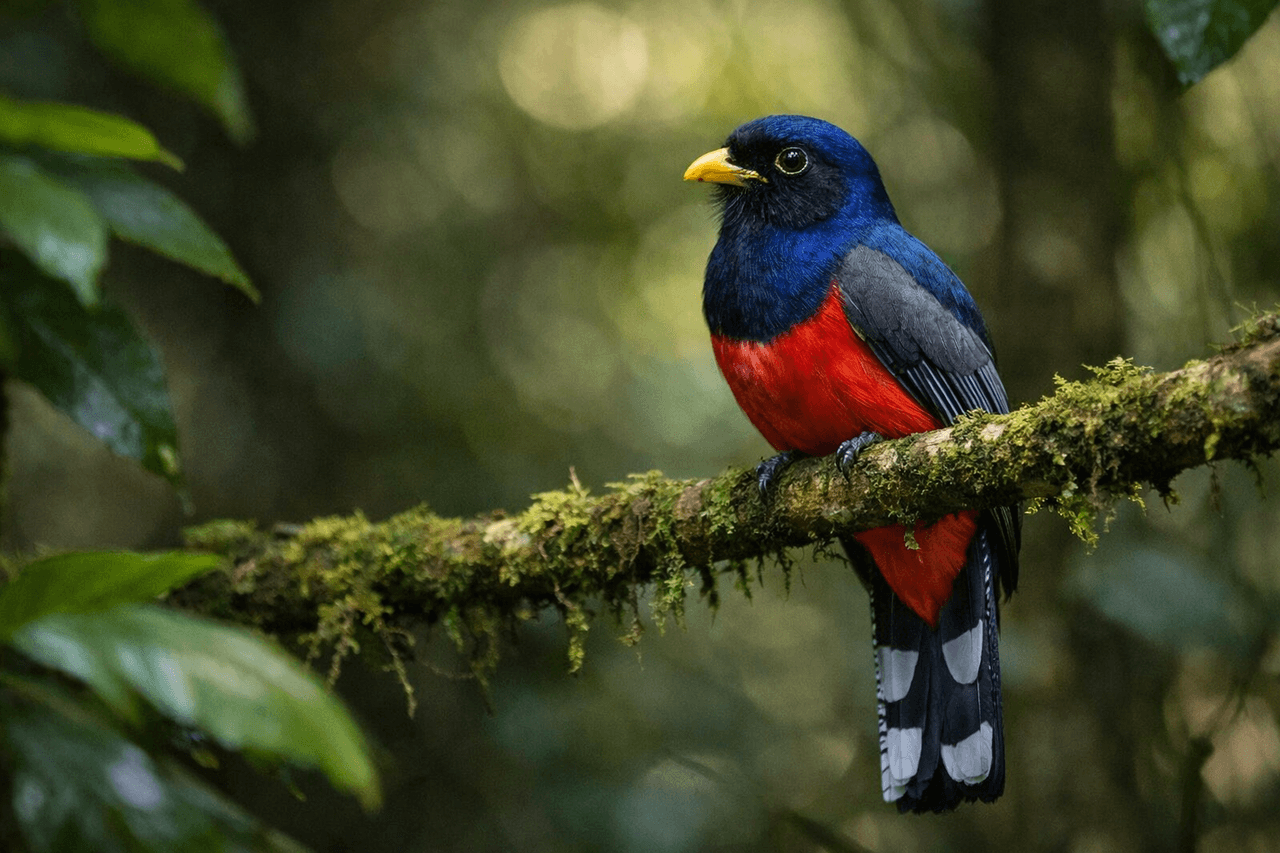
- Baird's trogon (primary forest understory)
- Great tinamou (forest floor, early morning)
- Black-cheeked ant-tanager (dense understory near streams)[3]
- Riverside wren (rocky streams)
- Fiery-billed aracari (canopy, fruiting trees)
- Spectacled owl (night walks with guides)[3]
Requirements: All visitors must enter with certified guides. Permits required. No same-day access—plan multi-day trips with camping or station lodging.
Golfo Dulce Mangroves: Endemic Habitat
The mangrove forests along Golfo Dulce host the mangrove hummingbird, found nowhere else on Earth. This is a must-shoot location for anyone targeting Costa Rican endemics[3].
Access: Puerto Jiménez area, boat tours, or kayak access at high tide. Early morning light works best before heat builds.
Target species:
- Mangrove hummingbird (endemic, red mangrove flowers)
- Mangrove vireo
- Yellow-billed cotinga (rare)
- Boat-billed heron (night roosts)
Matapalo and Private Reserves
The Matapalo area, south of Puerto Jiménez, offers excellent photography with better infrastructure than Corcovado.
Advantages:
- Private reserves with feeding stations and hummingbird gardens
- Better light management (forest edges, clearings)
- Comfortable lodging with early morning access
- Guides familiar with individual bird territories
Target species:
- Scarlet macaws (reliable flyovers and feeding trees)
- Toucans (both species, fruiting trees)
- Hummingbirds (multiple species at feeders)
- Trogons (forest edges)
Esquinas Rainforest Area (Eastern Osa)
Just east of the peninsula proper, Esquinas offers high species diversity with easier access. Featured in Hillstar Nature's 2026 Pacific Specials tour for good reason[3].
Target species:
- Coppery-headed emerald (foothill forests)
- Scaled antpitta (feeding stations)
- Black-breasted wood-quail (feeding stations, early morning)[3]
- Golden-naped woodpecker
- Green-fronted lancebill (hummingbird)[3]
Common Mistake: Assuming all Osa locations offer the same species. Mangrove hummingbird exists only in Golfo Dulce mangroves. Baird's trogon requires primary forest. Black-cheeked ant-tanager needs interior forest with streams. Match your target species to appropriate habitat.
What Equipment and Technique Work for Birds of the Osa Peninsula?
Rainforest bird photography demands different gear choices and techniques than open habitats. The Osa's conditions—low light, high humidity, dense vegetation—expose equipment limitations quickly.
Camera Bodies: High ISO Performance Matters
Forget the gear you'd use for shorebirds or raptors in open light. Rainforest understory operates at 1-3 stops below what you'd consider "good light."
Essential capabilities:
- Clean high ISO: 3200-6400 ISO minimum, 12800 usable
- Fast autofocus in low contrast: Subject detection, eye AF for birds
- Weather sealing: Not optional in 80%+ humidity
- Dual card slots: No second chances with rare species
Lenses: Fast Glass and Focal Length Balance
Primary lens (400mm f/2.8 or 500mm f/4): If you're serious about canopy species, trogons, and distant perches, you need the reach and light-gathering capability. Yes, they're heavy. Yes, they're worth it.
Secondary lens (70-200mm f/2.8 or 100-400mm f/4-5.6): For closer subjects, feeding stations, and situations where 500mm is too much lens.
Wide-angle (16-35mm f/2.8): Environmental portraits, habitat context, scarlet macaw flocks against forest canopy.
Macro (100mm f/2.8): Hummingbirds at flowers, detail shots, insects (context for insectivorous species).
Avoid: Slow zooms (f/5.6-6.3), lenses without weather sealing, anything you're not willing to use in 90% humidity with occasional rain.
Support: Tripods vs. Monopods vs. Handheld
Tripod: Useful at feeding stations and for planned setups. Impractical on trails—you'll miss shots while deploying it.
Monopod: Better compromise for trail work. Provides stability without the setup time.
Handheld: Most of my Osa work happens handheld with image stabilization. You need mobility to follow subjects through understory.
Gimbal head: If you're working a 500mm or 600mm lens at feeding stations or known perches, a gimbal head on a tripod provides smooth tracking.
Technique: Working Rainforest Light
The Osa's light doesn't behave like temperate forests or open habitats. Canopy filters and diffuses sunlight, creating soft, directionless illumination with occasional harsh spots where light penetrates.
Exposure approach:
- Spot meter on the bird, not the surrounding forest
- Expose for highlights on white or light-colored plumage, recover shadows in post
- Shoot RAW (obvious, but critical here)
- Bracket when possible with static subjects
Shutter speed:
- Perched birds: 1/500s minimum (1/1000s safer with long lenses)
- Active behavior: 1/1600s-1/2000s
- Flight: 1/2500s minimum, 1/3200s for macaws and fast-moving species
Aperture:
- f/2.8-f/4 for single subjects, maximize light
- f/5.6 when you need slightly more depth for two birds or angled subjects
- f/8 only when light permits and you need front-to-back sharpness
ISO:
- Start at 1600-3200 in typical understory conditions
- Push to 6400 without hesitation if it gets the shot
- Noise is better than motion blur—you can reduce noise in post, you can't fix blur
Autofocus:
- Single-point AF for precise placement on the eye
- Zone or wide-area AF for flight and moving subjects
- Back-button focus to separate focus from shutter release
- Continuous AF (AI Servo/AF-C) as default—even "perched" birds move
Common Mistakes:
- Underexposing to "protect highlights" and losing detail in dark plumage
- Using shutter speeds too slow for the focal length and subject movement
- Relying on center-point focus when the bird's eye is off-center
- Not checking histograms in-field (your LCD lies in bright conditions)
Humidity and Equipment Protection:
- Silica gel packets in camera bag, replace daily
- Lens cloths (multiple, they'll get damp)
- Rain covers even in dry season (afternoon showers happen)
- Ziplock bags for emergency rain protection
- Let equipment acclimate before opening bags after moving from AC to field
The Osa rewards technical competence and punishes gear limitations. If your camera struggles above ISO 1600 or your lens is slow, you'll spend more time fighting equipment than photographing birds.
How Do You Photograph Scarlet Macaws on the Osa Peninsula?
Scarlet macaws represent the Osa's most iconic photographic subject—and one of its most challenging. These birds are large, loud, and visible, but photographing them well requires understanding their behavior and the current conservation context.
Population and Distribution
The Osa Peninsula hosts one of Central America's healthiest wild scarlet macaw populations, but that doesn't mean they're everywhere. They concentrate around specific feeding trees, nesting sites, and flight corridors.
Best locations:
- Corcovado National Park (San Pedrillo and Sirena areas)
- Matapalo (morning flyovers, feeding trees)
- Carate to La Leona (beach and forest edge)
- Private reserves with known nesting trees (access through lodges)
Behavioral Patterns
Macaws operate on predictable schedules, which creates photographic opportunities if you're positioned correctly.
Morning routine (5:30-8:30 AM):
- Leave roosting trees in pairs or small groups
- Fly to feeding areas (almond trees, palm fruits)
- Vocal during flight, quieter while feeding
- Best light for flight shots and perched birds
Midday (9:00 AM-3:00 PM):
- Rest in canopy, preen, socialize
- Less active, harder to locate
- Harsh light, poor photographic conditions
Afternoon (3:00-6:00 PM):
- Secondary feeding period
- Return flights to roosting areas
- Backlit conditions common, plan accordingly
Photographic Approaches
Flight shots: Position yourself along known flight corridors before dawn. Macaws fly high and fast—you need clear sky background, fast shutter speeds (1/2500s+), and continuous autofocus. Early morning light provides the best color saturation.
Perched birds: Feeding trees offer longer opportunities. Use 400-500mm focal length, watch for clean backgrounds (sky or distant forest), and wait for head turns and eye contact. Macaws are large enough that f/4-f/5.6 provides adequate depth of field.
Pairs and behavior: Macaws mate for life and show strong pair bonding. Look for allopreening, feeding interactions, and synchronized movements. These behavioral moments separate documentary shots from compelling images.
Environmental portraits: Use 70-200mm or wider to show macaws in habitat context—perched in cecropia trees, flying over Golfo Dulce, or against rainforest canopy. These images tell the conservation story better than tight portraits.
Conservation Context and Ethics
In April 2026, Costa Rican authorities issued warnings about surging wildlife trafficking on the Osa Peninsula, with poachers specifically targeting scarlet macaws, parrots, and parakeets during peak nesting season[4]. This isn't abstract conservation concern—it's an active threat happening now.
Ethical photography practices:
- Never approach nesting trees or reveal nest locations publicly
- Don't use playback to attract macaws (unnecessary and stressful)
- Maintain distance (50+ meters minimum, use long lenses)
- Report suspicious activity to park rangers or local authorities
- Support conservation-focused lodges that protect nesting habitat
Technical Challenge: Macaws' brilliant red plumage can blow out highlights in bright conditions. Expose for the red feathers, let the shadows go dark, and recover them in post-processing. Shoot RAW and use highlight-weighted metering.
The Osa's scarlet macaws aren't just photographic subjects—they're indicators of habitat health and targets of illegal trade. Your images can support conservation efforts, but only if you're working ethically and not contributing to disturbance.
What Are the Rare and Endemic Birds of the Osa Peninsula Worth Targeting?
Beyond the iconic species, the Osa offers access to birds that remain difficult or impossible to photograph elsewhere. These are the subjects that define a serious bird photography portfolio from the region.
Costa Rican Mainland Endemics (All Four Present)
Coppery-headed Emerald (Microchera cupreiceps)
- Habitat: Foothill forests, 300-1500m elevation
- Location: Esquinas area, higher elevation reserves east of Osa proper[3]
- Behavior: Visits heliconia and other tubular flowers, aggressive at feeding territories
- Photographic approach: Hummingbird flash setups or natural light at flowers, 100-200mm macro, fast shutter speeds (1/2000s+)
Mangrove Hummingbird (Amazilia boucardi)
- Habitat: Red mangrove forests, Golfo Dulce exclusively[3]
- Location: Puerto Jiménez area, accessible by boat or kayak
- Behavior: Feeds on mangrove flowers, territorial
- Photographic approach: Early morning boat access, natural light, 200-400mm for working distance, high tide provides better angles
Cabanis's Ground-Sparrow (Melozone cabanisi)
- Habitat: Dense understory, primary forest floor[3]
- Location: Corcovado interior, Esquinas feeding stations
- Behavior: Skulking, forages in leaf litter, responds to playback (use ethically)
- Photographic approach: Ground-level shooting, 200-400mm, patience required, feeding stations provide best opportunities
Black-cheeked Ant-Tanager (Habia atrimaxillaris)
- Habitat: Primary forest understory near streams[3]
- Location: Corcovado interior, requires hiking access
- Behavior: Follows ant swarms, mixed-species flocks, vocal
- Photographic approach: Low light specialist, high ISO (3200-6400), 400mm+, wait near ant swarm activity
Rare and Range-Restricted Species
Baird's Trogon (Trogon bairdii)
- Status: Near-endemic to Pacific slope southern Costa Rica and western Panama
- Habitat: Primary lowland rainforest understory[3]
- Location: Corcovado, Esquinas, mature forest reserves
- Behavior: Perches motionless for extended periods, sallies for insects
- Photographic approach: Locate by call, approach slowly, 400-500mm, f/2.8-f/4 for low light, wait for head turns and eye contact
Ocellated Crake (Micropygia schomburgkii)
- Status: Rare, secretive, "mythical" according to tour operators[3]
- Habitat: Dense marsh vegetation, wet grasslands
- Location: Esquinas area wetlands, extremely difficult to locate
- Behavior: Crepuscular, skulking, rarely seen
- Photographic approach: Requires local guide knowledge, pre-dawn positioning, 400mm+, high ISO, extreme patience
Rosy Thrush-Tanager (Rhodinocichla rosea)
- Status: Uncommon, range-restricted
- Habitat: Dense understory, bamboo thickets[3]
- Location: Esquinas area, specific known territories
- Behavior: Skulking, forages low, responds to playback
- Photographic approach: Ground-level work, 200-400mm, feeding stations provide best access
"Puntarenas Screech-Owl" (Megascops sp.)
- Status: Undescribed species, not yet formally named[3]
- Habitat: Humid lowland forest
- Location: Osa Peninsula and surrounding Pacific lowlands
- Behavior: Nocturnal, roosts in dense vegetation
- Photographic approach: Night work with local guides who know roost sites, 200-400mm, flash or high ISO natural light, ethical approach critical
Spectacled Owl (Pulsatrix perspicillata)
- Status: Uncommon but regular
- Habitat: Primary forest, hunts at edges and clearings[3]
- Location: Corcovado, private reserves with night access
- Behavior: Crepuscular and nocturnal, occasionally active at dusk
- Photographic approach: Dusk shoots (better light than full night), 400mm f/2.8 or f/4, ISO 3200-6400, guides essential for locating individuals
Scaled Antpitta (Grallaria guatimalensis)
- Habitat: Forest floor, dense understory
- Location: Esquinas feeding stations[3]
- Behavior: Shy, responds to feeding stations with regular provisioning
- Photographic approach: Ground-level shooting, 200-300mm, natural light, early morning, requires lodge with established feeding program
Black-breasted Wood-Quail (Odontophorus leucolaemus)
- Habitat: Forest floor, primary forest
- Location: Esquinas feeding stations, early morning[3]
- Behavior: Ground-dwelling, travels in coveys, extremely shy
- Photographic approach: Pre-dawn positioning at feeding stations, 200-400mm, low light technique, minimal movement
Strategy for Rare Species:
These birds don't respond to casual effort. You need:
- Local guide expertise (they know individual territories and roost sites)
- Multi-day commitment (one morning won't cut it)
- Specialized lodges with feeding stations or known territories
- Technical low-light capability (most are understory or nocturnal species)
- Patience and field discipline (hours of waiting for minutes of opportunity)
The Osa's rare species separate photographers who visit from photographers who commit to the region. These are portfolio-defining subjects, but they demand time, skill, and the right local connections.
What Field Craft and Ethics Matter for Birds of the Osa Peninsula?
Technical skill gets you sharp images. Field craft gets you the opportunity to make those images in the first place. And ethics ensures the Osa's birds remain photographable for the next generation.
Rainforest Movement and Approach
Rainforest isn't like open habitat where you can see subjects from distance and plan approaches. Birds appear suddenly, often close, and disappear just as quickly.
Movement principles:
- Slow and steady beats fast and quiet—sudden movements trigger flight responses
- Watch where you step—dry leaves, snapping twigs, and rustling vegetation alert birds
- Use natural cover—tree trunks, vegetation, terrain features
- Stop frequently—standing still reveals birds that freeze when they detect movement
- Listen first—most birds vocalize before you see them, use calls to locate and identify
Clothing and Gear:
- Muted colors (olive, brown, gray—not camo, which looks out of place)
- Quiet fabrics (avoid nylon that rustles)
- Rubber boots for wet trails and stream crossings
- Long sleeves and pants (protection from insects, vegetation, sun)
- Minimal jewelry or gear that clinks or reflects light
Working with Guides
In Corcovado, guides aren't optional—they're required. But even where they're not mandatory, local guides provide value that justifies the cost.
What good guides offer:
- Species identification (especially for similar species and vocalizations)
- Territory knowledge (where specific birds are reliably found)
- Behavioral prediction (what the bird is likely to do next)
- Access to private land and feeding stations
- Safety and navigation in remote areas
How to work effectively with guides:
- Communicate your targets before the trip (specific species, behaviors, image goals)
- Explain your photographic needs (approach distance, angles, light direction)
- Be clear about pace (photographers move slower than birders with binoculars)
- Respect their expertise (they know the forest better than you do)
- Tip appropriately (15-20% for good guiding, more for exceptional work)
Ethical Photography Standards
The April 2026 surge in wildlife trafficking on the Osa Peninsula makes ethical practices more critical than ever[4]. Your behavior in the field either supports conservation or contributes to pressure on vulnerable species.
Non-negotiable ethics:
Never approach nests or reveal nest locations. Nesting birds are vulnerable to disturbance and predation. Photographers who share nest locations—even privately—contribute to trafficking risk[4].
Maintain appropriate distance. Use long lenses, not close approaches. If a bird changes behavior because of your presence, you're too close.
No playback in protected areas. Playback (broadcasting recorded calls) stresses birds, disrupts breeding behavior, and is prohibited in most parks. Use it sparingly elsewhere, if at all.
Don't bait or lure birds. Feeding stations maintained by lodges are different from photographers placing food to attract subjects. The former is managed and consistent; the latter disrupts natural foraging.
Respect closed areas and regulations. If a trail is closed, a permit is required, or an area is restricted, those rules exist for reasons. Follow them.
Report illegal activity. If you observe poaching, nest robbing, or trafficking activity, report it to park rangers or local authorities immediately[4].
Support conservation-focused operations. Choose lodges, guides, and tour operators who demonstrate genuine conservation commitment, not just marketing language.
Feeding Stations: The Ethical Gray Area
Several lodges near the Osa operate feeding stations for antpittas, wood-quails, and other ground species. These stations provide photographic access to otherwise nearly impossible subjects[3].
When feeding stations work ethically:
- Operated consistently by the lodge (not ad-hoc by photographers)
- Use natural food items appropriate to the species
- Don't create dependency (supplemental, not primary food source)
- Managed to avoid overcrowding and stress
- Located away from nesting areas
When they're problematic:
- Created temporarily by photographers for specific shoots
- Use inappropriate food (bread, processed items)
- Attract excessive numbers of birds or photographers
- Located near nests or sensitive areas
If you're using feeding stations, choose lodges with established, long-term programs that prioritize bird welfare over photographic convenience.
The Bigger Picture
The Osa Peninsula faces real conservation challenges: habitat fragmentation outside protected areas, illegal logging, poaching, and now increased wildlife trafficking[4]. Photographers have influence—your images shape public perception, your spending supports local economies, and your behavior sets examples for others.
Work in ways that leave the Osa's birds better off, not worse. That's not idealism—it's the baseline for operating in one of the most biologically significant places on Earth.
How Do You Plan a Bird Photography Trip to the Osa Peninsula?
Logistics matter. The Osa isn't a place where you can improvise effectively—access, permits, guides, and timing require advance planning.
Trip Duration
Minimum: 5-7 days for a meaningful photography trip. Less than that, and you're spending more time traveling than shooting.
Optimal: 10-14 days allows coverage of multiple locations (Corcovado, Golfo Dulce, Matapalo, Esquinas), accounts for weather variables, and provides time to work specific species.
Extended: 3+ weeks for photographers targeting rare species, working on specific projects, or combining the Osa with other Costa Rican locations.
Access and Transportation
Getting to the Osa:
- Fly: San José (SJO) to Puerto Jiménez (PJM) on SANSA or Aerobell (35 minutes, small planes, weight limits on gear)
- Drive: San José to Puerto Jiménez (6-8 hours, 4WD recommended, especially in green season)
- Boat: Drake Bay access from Sierpe (1.5 hours, connects to San Pedrillo entrance of Corcovado)
Local transportation:
- 4WD vehicle rental (essential for Matapalo, Carate, and exploring)
- Boat transfers (Golfo Dulce, Corcovado coastal access)
- Lodge transfers (many lodges provide transportation from Puerto Jiménez)
Accommodation Strategy
Puerto Jiménez (base town):
- Central location, services, restaurants, gear shops
- Good for multi-location trips with daily drives
- Less immersive than forest lodges
Matapalo area (south of Puerto Jiménez):
- Private reserves, feeding stations, hummingbird gardens
- Comfortable lodges with good infrastructure
- Excellent for scarlet macaws, toucans, accessible species
Corcovado (Sirena Station):
- Ranger station lodging (basic, shared rooms)
- Best species diversity, primary forest access
- Requires advance booking (months ahead for peak season)
- Camping also available at designated sites
Drake Bay area:
- Access to San Pedrillo entrance of Corcovado
- Boat-based logistics
- Good for combining Corcovado with coastal species
Esquinas area (east of Osa proper):
- Lodges with feeding stations for rare species[3]
- Higher elevation, slightly cooler
- Excellent for endemics (coppery-headed emerald, ground-sparrow)
Choose lodges based on:
- Target species access
- Early morning departure capability (5:30 AM or earlier)
- Guide quality and availability
- Equipment storage and drying facilities
- Proximity to shooting locations
Permits and Regulations
Corcovado National Park:
- All visitors must enter with certified guides (no exceptions)
- Advance reservations required for Sirena Station
- Daily visitor limits (book early for dry season)
- Permit fees approximately $15-20 per day for foreigners
Private reserves:
- Some require advance booking
- Fees vary by property
- Access often included with lodge stays
Photography-specific regulations:
- Commercial photography may require additional permits
- Drone use prohibited in national parks
- Flash photography restrictions in some areas (check locally)
Guided Tours vs. Independent Travel
Guided photography tours (like Hillstar Nature's 2026 Pacific Specials[3]):
- Advantages: Expert guides, pre-scouted locations, logistics handled, group learning
- Disadvantages: Fixed schedule, group pace, higher cost, less flexibility
- Best for: Photographers new to the region, those targeting rare species, anyone who values expert guidance
Independent travel:
- Advantages: Flexible schedule, choose your own locations, work at your own pace
- Disadvantages: Requires more research, guide hiring separate, logistics more complex
- Best for: Experienced tropical photographers, those with specific project goals, repeat visitors
Hybrid approach: Book key days with specialized guides (Corcovado, night shoots, rare species) and work independently at lodges with feeding stations and accessible species.
Budget Considerations
Daily costs (rough estimates, 2026):
- Budget: $100-150/day (basic lodging, shared guides, self-catering)
- Mid-range: $200-350/day (comfortable lodges, private guides, meals included)
- Premium: $400-600+/day (high-end lodges, private guides, boat access, specialized shoots)
Additional costs:
- Flights: San José-Puerto Jiménez $100-200 round-trip
- Vehicle rental: $50-80/day for 4WD
- Corcovado permits and guides: $100-150/day per person
- Specialized guides: $150-300/day for private guiding
- Boat transfers: $50-150 depending on distance
Photography tours: $4,000-7,000+ for 10-14 day trips, all-inclusive
Packing Essentials
Camera gear:
- Primary body + backup
- 400-500mm telephoto
- 70-200mm or 100-400mm
- Wide-angle (16-35mm)
- Macro (100mm)
- Multiple batteries (bring 2x what you think you need)
- Memory cards (bring 2x capacity you estimate)
- Lens cleaning supplies
- Rain covers
- Silica gel packets
Field gear:
- Rubber boots (essential)
- Quick-dry clothing (long sleeves, long pants)
- Rain jacket
- Hat with brim
- Headlamp (for pre-dawn starts and night work)
- Insect repellent (DEET-based)
- Sunscreen
- Water bottles
- Small backpack for day trips
Common Planning Mistakes:
- Underestimating travel time between locations
- Not booking Corcovado permits far enough in advance
- Bringing too much gear (you'll carry it on trails)
- Not allowing buffer days for weather
- Scheduling afternoon flights (morning weather is more reliable)
- Expecting cell service and internet everywhere (it's limited)
The Osa rewards preparation. The more you plan in advance—especially for Corcovado access and rare species targets—the more productive your shooting time becomes.
Conclusion
The Birds of the Osa Peninsula represent one of the most concentrated photographic opportunities on the planet. With over 463 species in less than 1,700 square kilometers, all four Costa Rican mainland endemics, and rare species found nowhere else, the Osa delivers on its reputation as one of the most biologically intense places on Earth[2].
But this isn't a destination for casual bird photography. The Osa demands technical competence in low-light conditions, physical capability for remote access, and ethical commitment in a region facing real conservation pressures. The April 2026 surge in wildlife trafficking targeting scarlet macaws and other species makes responsible photography practices more critical than ever[4].
For photographers willing to meet those demands, the Osa offers portfolio-defining images: scarlet macaws against rainforest canopy, Baird's trogons in primary forest understory, endemic hummingbirds at native flowers, and rare species that remain nearly impossible to photograph elsewhere.
Your next steps:
Define your target species and match them to appropriate locations (Corcovado for primary forest species, Golfo Dulce for mangrove hummingbird, Esquinas for endemics at feeding stations)
Choose your season based on priorities (dry season for access and light, green season for behavior and nesting)
Book Corcovado permits and Sirena Station well in advance if targeting interior forest species
Research lodges and guides with proven track records for bird photography (not just birding tours)
Prepare your equipment for high humidity, low light, and challenging field conditions
Commit to ethical practices that support conservation rather than contributing to pressure on vulnerable species
The Osa Peninsula isn't getting less crowded—The New York Times' 4th place ranking for 2026 ensures increased visitation[2]. But the birds that make this region exceptional remain, for now, accessible to photographers who approach the work with skill, respect, and genuine commitment to the place.
The question isn't whether the Osa delivers on its reputation. It does. The question is whether you're prepared to work at the level this region demands.
FAQ
What is the best time of year to photograph birds on the Osa Peninsula?
December through April (dry season) offers the best combination of weather, access, and light quality. Early morning shoots (5:30-8:30 AM) provide peak bird activity and optimal photographic conditions[1]. Green season (May-November) brings breeding behavior but more challenging logistics.
How many bird species can I expect to see on the Osa Peninsula?
The Osa Peninsula hosts over 463 recorded bird species in approximately 1,700 square kilometers[2]. Realistic expectations for a 10-14 day photography trip: 150-200 species observed, 50-80 species photographed successfully, depending on locations visited and effort level.
Do I need a guide to photograph birds in Corcovado National Park?
Yes. All visitors to Corcovado National Park must enter with certified guides—no exceptions. Guides are also highly recommended for other locations, as they provide species identification, territory knowledge, and access to private lands with feeding stations.
What camera equipment do I need for Osa Peninsula bird photography?
Essential gear includes a camera body with clean high ISO performance (3200-6400), a 400-500mm telephoto lens (f/2.8 or f/4), weather sealing, and fast autofocus. Secondary lenses (70-200mm, 16-35mm, 100mm macro) expand creative options. High humidity demands silica gel, lens cloths, and rain protection.
Can I photograph all four Costa Rican endemic birds on the Osa Peninsula?
Yes. The Osa Peninsula and immediately adjacent areas provide access to all four mainland Costa Rican endemics: coppery-headed emerald, mangrove hummingbird, Cabanis's ground-sparrow, and black-cheeked ant-tanager[3]. Each requires specific habitat and location planning.
How close can I get to scarlet macaws for photography?
Maintain minimum 50-meter distance from scarlet macaws and use long lenses (400mm+) rather than close approaches. Never approach nesting trees. Wildlife trafficking targeting macaws surged in April 2026, making ethical distance practices critical for conservation[4].
What are the biggest challenges for bird photography on the Osa Peninsula?
Low light in rainforest understory (requiring high ISO 3200-6400), high humidity affecting equipment, dense vegetation limiting clean backgrounds, and physical demands of accessing remote locations. Technical skill in low-light photography and rainforest fieldcraft separate successful shoots from frustrating ones.
Are there feeding stations for bird photography on the Osa Peninsula?
Several lodges in the Esquinas area and around the Osa operate feeding stations for ground species including scaled antpitta, black-breasted wood-quail, and Cabanis's ground-sparrow[3]. These provide photographic access to otherwise extremely difficult species when operated ethically by established lodges.
How much does a bird photography trip to the Osa Peninsula cost?
Budget $100-150/day for basic independent travel, $200-350/day for mid-range lodges with guides, or $400-600+/day for premium experiences. Guided photography tours typically run $4,000-7,000+ for 10-14 days all-inclusive. Add flights, permits, and equipment considerations to base costs.
What rare birds can I photograph on the Osa Peninsula?
Target rare species include Baird's trogon, ocellated crake, rosy thrush-tanager, the undescribed "Puntarenas screech-owl," spectacled owl, and scaled antpitta[3]. These require specialized guides, multi-day commitment, and often access to specific lodges with known territories or feeding stations.
Is it safe to photograph birds in Corcovado National Park?
Corcovado is safe when following regulations and working with certified guides. Real risks include river crossings (crocodiles present), heat and humidity (dehydration), and wildlife encounters (maintain distance from all animals). The required guide system ensures safety protocols are followed.
What's the difference between the Osa Peninsula and other Costa Rican birding locations?
The Osa Peninsula offers the highest species density and most intact primary lowland rainforest in Costa Rica. It hosts species unavailable elsewhere (mangrove hummingbird, Baird's trogon) and provides access to all four mainland endemics[3]. The tradeoff is more challenging logistics and field conditions compared to accessible highland locations.
References
[1] News Discover Flora And Fauna Costa Rica 2026 - https://www.homeexchange.com/blog/news-discover-flora-and-fauna-costa-rica-2026/
[2] Osa Peninsula Worlds Top Travel Destination 2026 - https://botanikaresort.com/osa-peninsula-worlds-top-travel-destination-2026/
[3] Costa Rica Pacific Specials 2026 - https://www.hillstarnature.com/costa-rica-pacific-specials-2026
[4] Costa Rica Warn Of Rising Wildlife Trafficking In Osa During Nesting Season - https://ticotimes.net/2026/04/08/costa-rica-warn-of-rising-wildlife-trafficking-in-osa-during-nesting-season
[5] Costa Rica Camera Trap Records Birds Far Beyond Their Expected Range - https://ticotimes.net/2026/03/09/costa-rica-camera-trap-records-birds-far-beyond-their-expected-range