Last updated: April 17, 2026
Quick Answer
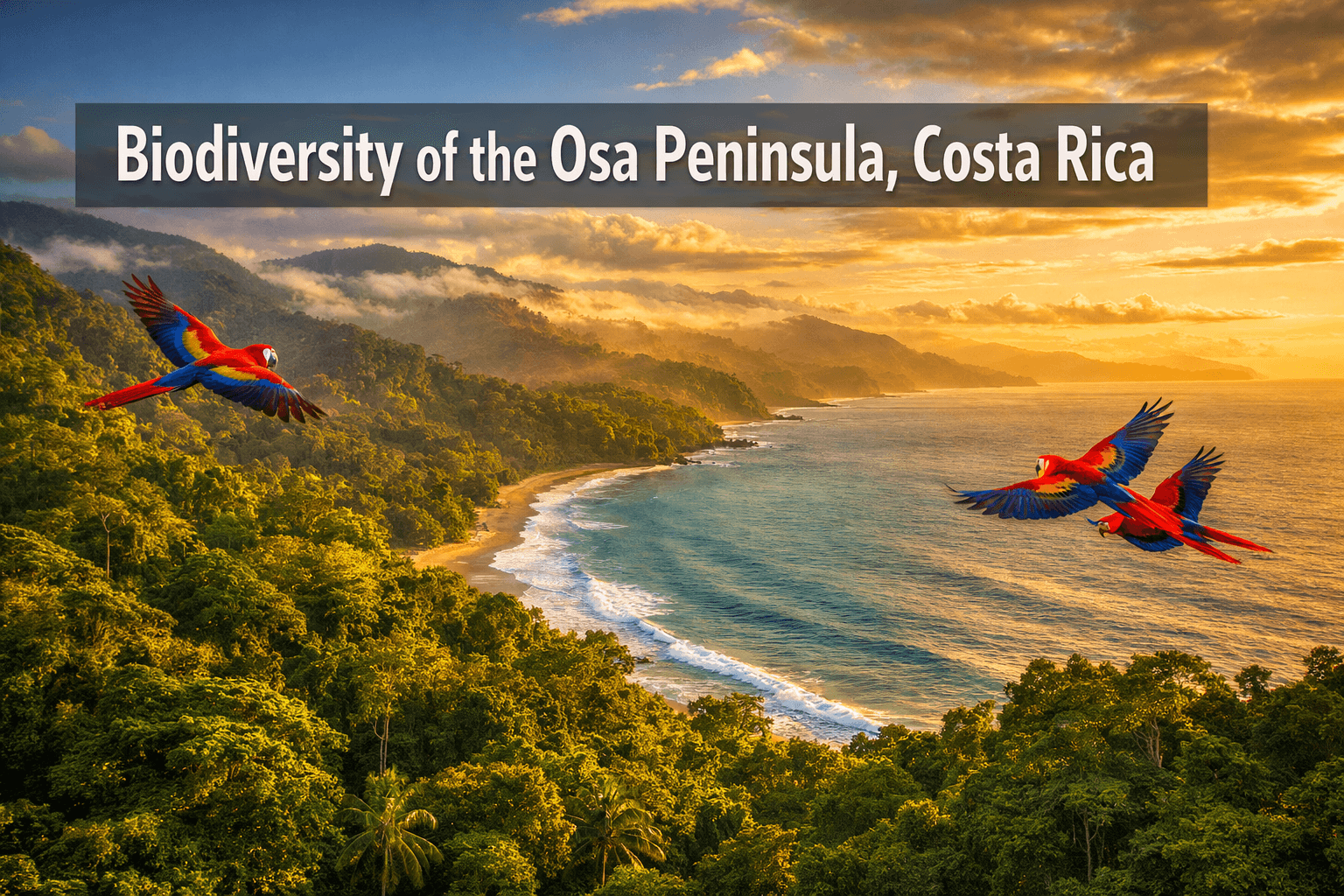
The biodiversity of the Osa Peninsula represents approximately 2.5% of Earth's total species while covering less than 0.03% of the planet's surface, earning it National Geographic's designation as "the most biologically intense place on Earth." This 700-square-mile region on Costa Rica's southern Pacific coast hosts around 250,000 species—including 323 found nowhere else—across virgin rainforest, coastal, and marine ecosystems that evolved in geological isolation for millions of years[2][5].
Key Takeaways
- Unmatched concentration: The Osa Peninsula contains 2.5% of all Earth's biodiversity in just 0.03% of its surface area[2][5]
- 2026 recognition: Ranked fourth on The New York Times' 52 must-visit places for 2026, specifically for its biodiversity[4]
- Species count: Approximately 250,000 species call the peninsula home, with 323 endemic species found nowhere else[2]
- Wildlife diversity: Nearly 140 mammal species, hundreds of bird species including Central America's largest scarlet macaw population[2]
- Marine richness: Critical nesting grounds for three sea turtle species, plus dolphins, whales, and vibrant coral reefs[2]
- Pristine ecosystems: Almost entirely covered in virgin rainforest extending to Pacific coastline[2]
- Geological uniqueness: Evolved in isolation for millions of years before connecting to mainland Costa Rica[2]
- Accessible adventure: Protected areas with sustainable lodges and guided trails make wildlife encounters achievable for travelers[1]
What Makes the Biodiversity of the Osa Peninsula So Exceptional?
The biodiversity of the Osa Peninsula stands out because it packs an extraordinary concentration of life into a relatively small area—roughly half of all Costa Rican species exist here despite the peninsula occupying just a fraction of the country's landmass[2]. This biological intensity stems from the region's unique geological history and diverse ecosystems.
About 2 million years ago, the Osa Peninsula existed as an isolated island before tectonic activity merged it with mainland Costa Rica[2]. During this isolation period, species evolved independently, creating endemic wildlife found nowhere else on the planet. When the peninsula finally connected to the mainland, species from both regions mixed, creating an exceptional diversity hotspot.
The peninsula's 700 square miles contain multiple distinct ecosystems compressed together:
- Virgin rainforest: Dense tropical forest covering most of the peninsula, extending right to the Pacific coast
- Coastal zones: Pristine beaches and mangrove systems where terrestrial and marine life intersect
- Freshwater systems: Rivers and streams supporting unique aquatic species
- Marine environments: Coral reefs and open ocean waters teeming with fish, mammals, and invertebrates
Choose the Osa Peninsula if you want to see maximum wildlife diversity in minimum travel time. A single day here can yield encounters with monkeys, sloths, scarlet macaws, sea turtles, and dolphins—species that would require visiting multiple countries elsewhere.
Common mistake: Travelers often assume biodiversity means seeing large animals constantly. In reality, the Osa's richness includes thousands of insect species, plants, fungi, and microorganisms. The visible megafauna represents just a fraction of the total diversity.
How Many Species Live on the Osa Peninsula?
The Osa Peninsula hosts approximately 250,000 species across all taxonomic groups, with 323 endemic species that exist nowhere else on Earth[2]. This staggering number includes everything from microscopic organisms to jaguars and humpback whales.
Breaking down the biodiversity by major groups:
Mammals: Nearly 140 species—essentially all of Costa Rica's mammal diversity—inhabit the peninsula[2]. This includes:
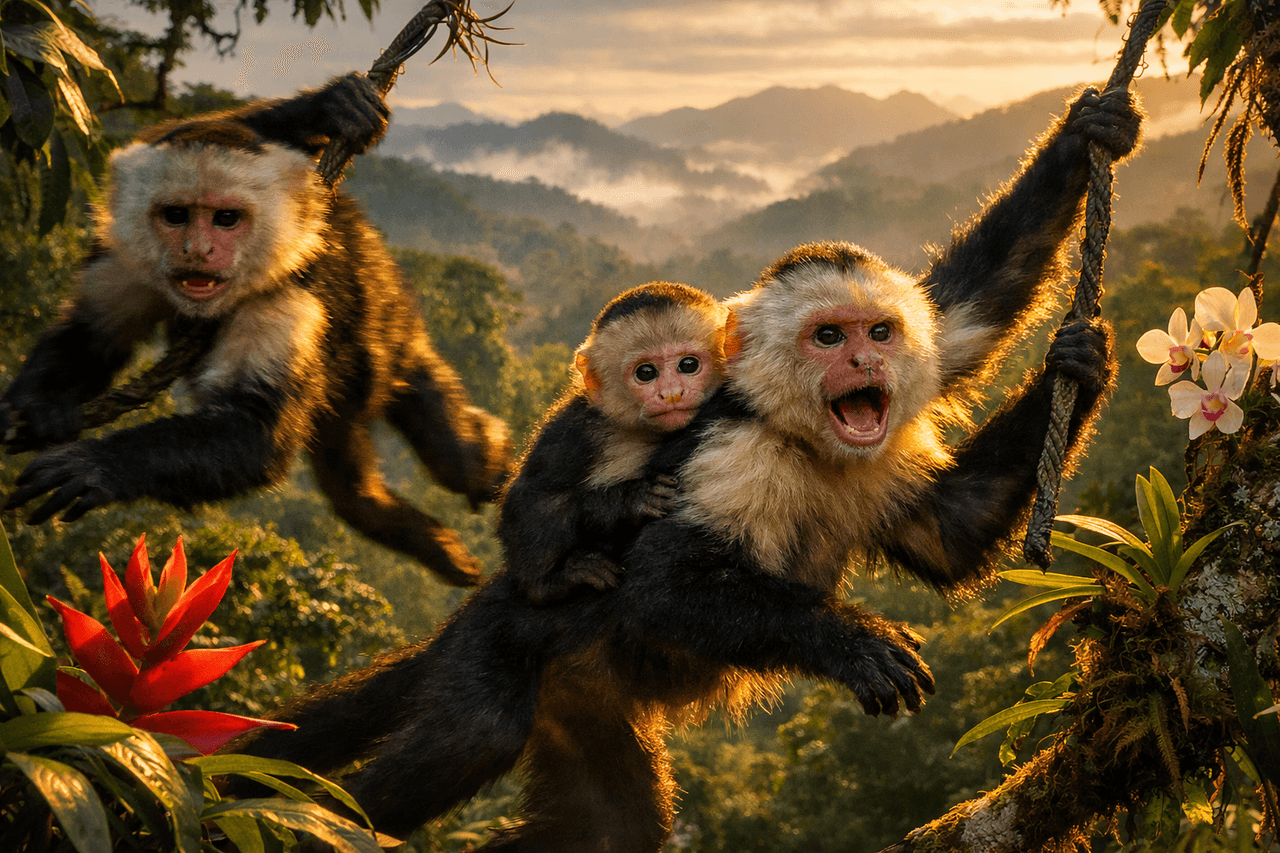
- All four Costa Rican monkey species (howler, spider, capuchin, squirrel)
- Six cat species including jaguars, pumas, ocelots, margays, jaguarundis, and oncillas
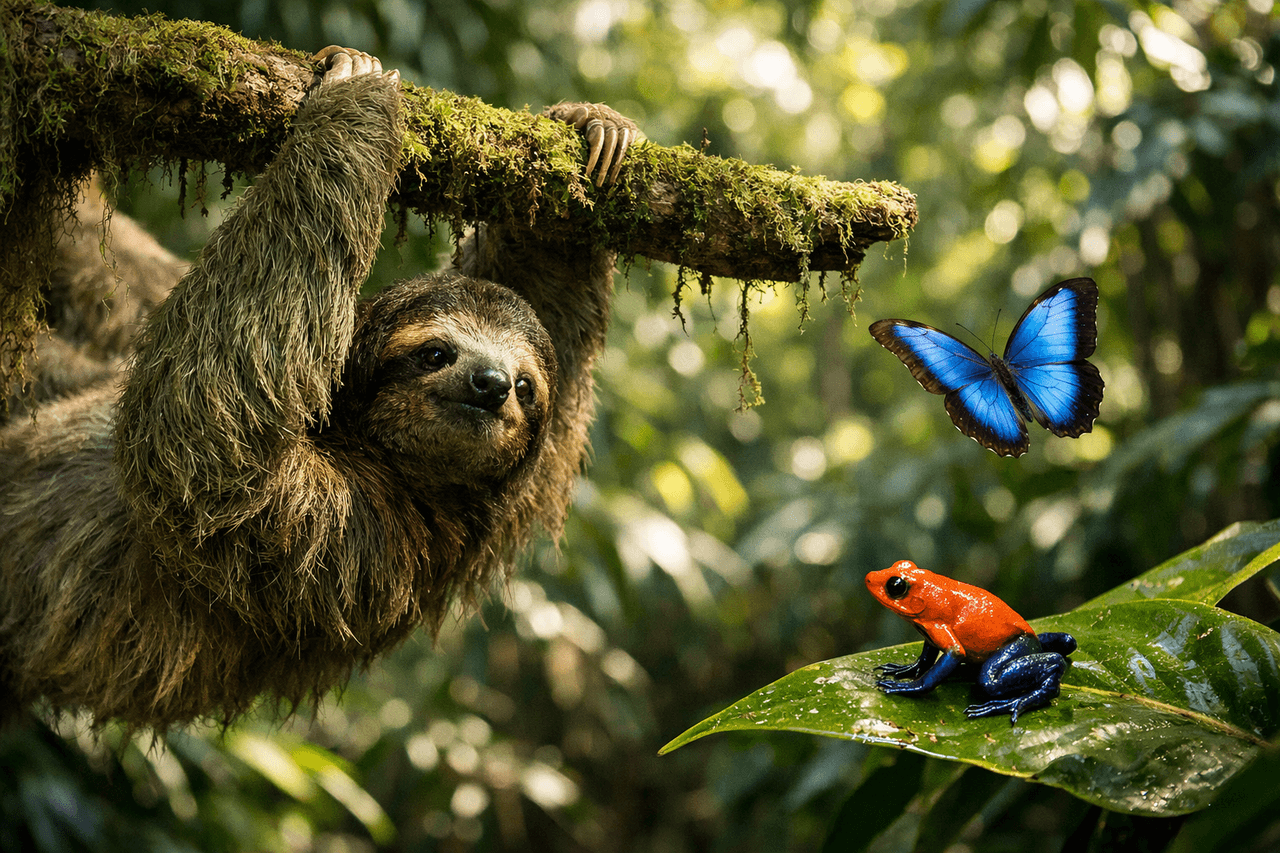
- Three-toed and two-toed sloths
- Baird's tapirs (Central America's largest land mammal)
- White-lipped and collared peccaries
- Giant anteaters
Birds: Hundreds of bird species make the Osa their home, including the largest population of scarlet macaws in Central America[2]. Migration seasons bring additional species, making the peninsula a premier birdwatching destination[3]. Notable species include:
- Scarlet macaws (the region's iconic species)
- Harpy eagles (one of the world's largest and most powerful raptors)
- Resplendent quetzals
- Toucans (multiple species)
- Hummingbirds (dozens of species)
Marine life: The surrounding Pacific waters support vibrant ecosystems with:
- Bottlenose and spotted dolphins[2]
- Humpback whales (two separate populations visit at different times)
- Multiple shark species
- Hundreds of tropical fish species
- Vibrant coral reef communities
Reptiles and amphibians: The peninsula hosts numerous species including:
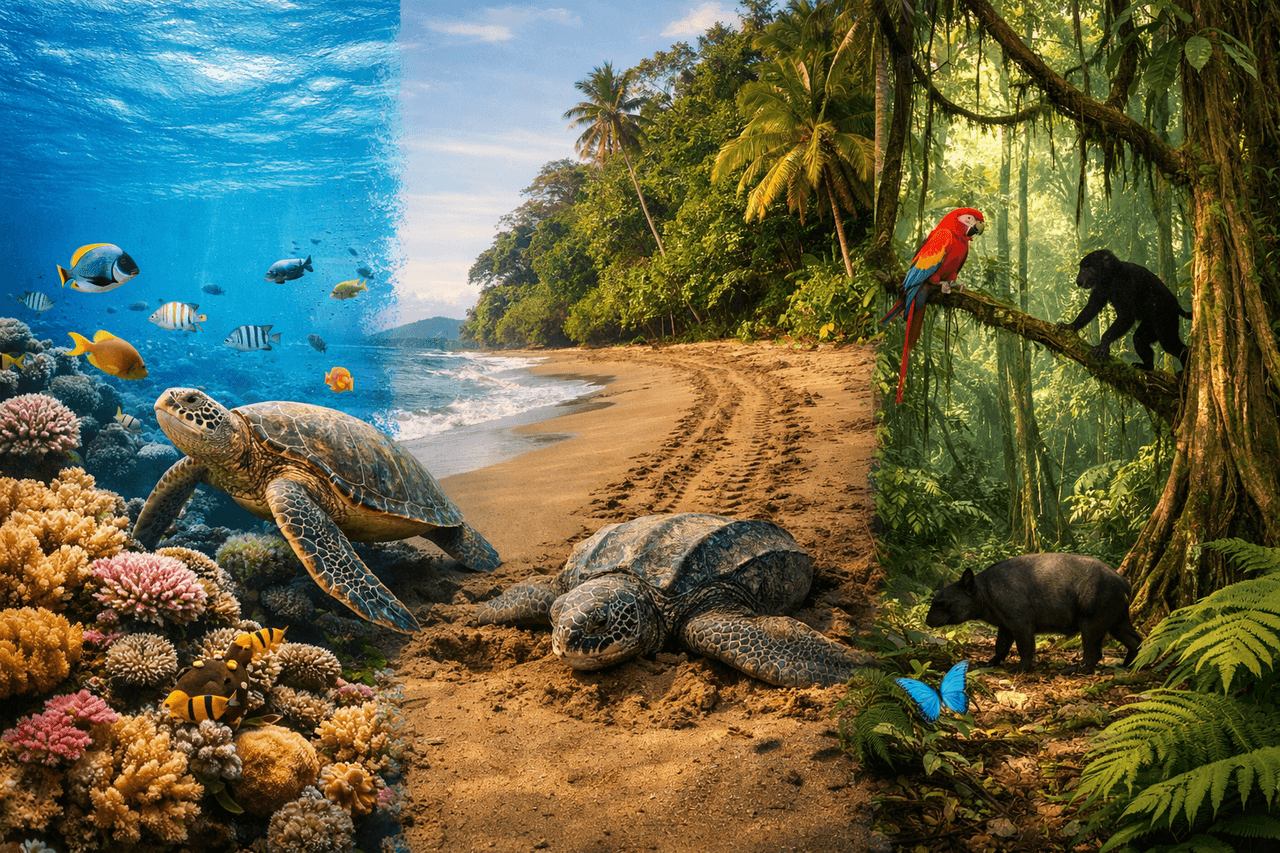
- Three sea turtle species that nest on Osa beaches (hawksbill, green, leatherback)[2]
- Multiple crocodile and caiman species
- Poison dart frogs in brilliant colors
- Countless snake and lizard species
Edge case: Species counts vary depending on how researchers classify organisms. The 250,000 figure includes insects, plants, fungi, and microorganisms—groups that scientists continue discovering and cataloging.
Why Did The New York Times Rank the Osa Peninsula as a Top 2026 Destination?
The New York Times ranked the Osa Peninsula fourth on its prestigious list of 52 must-visit places worldwide for 2026, specifically recognizing its unmatched biodiversity and meaningful travel experiences[4]. This recognition reflects growing traveler interest in authentic nature encounters rather than conventional tourism.
The 2026 ranking highlights several factors that make the Osa Peninsula particularly relevant now:
Conservation success stories: Unlike many biodiverse regions facing rapid degradation, the Osa has maintained its ecological integrity through protected areas like Corcovado National Park and community-led conservation initiatives. Travelers increasingly seek destinations where their visits support preservation rather than contribute to environmental damage.
Accessible wilderness: The peninsula offers genuine rainforest immersion without requiring extreme expedition-level fitness or resources. Certified sustainable lodges provide comfortable bases for wildlife encounters, while local guides with deep ecological knowledge lead trails through protected areas[1].
Meaningful engagement: The Osa delivers transformative experiences that go beyond typical vacation activities. Walking through virgin rainforest where jaguars hunt, watching scarlet macaws fly overhead in pairs, or witnessing sea turtles nest on moonlit beaches creates lasting connections to the natural world.
Timing considerations: Visit during the green season (May-November) for peak wildlife activity and fewer crowds, though trails can be muddy. The dry season (December-April) offers easier hiking but more visitors. Sea turtle nesting peaks July-October[2][3].
What this means for travelers: The New York Times recognition will likely increase visitor interest in 2026. Book accommodations and guided experiences well in advance, especially for peak wildlife seasons. Choose operators committed to sustainable practices to help preserve what makes the Osa special.
What Wildlife Can Travelers Realistically Expect to See?
Travelers to the Osa Peninsula can realistically expect to encounter 15-30 different vertebrate species during a 3-5 day visit, with the exact number depending on season, habitat coverage, and time spent actively searching. The peninsula's concentrated biodiversity means wildlife sightings happen frequently, though spotting specific species requires understanding their behaviors and habitats.
High-probability encounters (80%+ chance with guided tours):
- Scarlet macaws: These brilliant red, yellow, and blue parrots fly in pairs or small groups, often seen in early morning or late afternoon. The Osa hosts Central America's largest population[2]
- Howler monkeys: Their distinctive roaring calls carry for miles. Groups typically feed in canopy trees during morning hours
- White-faced capuchin monkeys: Highly active and curious, these intelligent primates often approach trails
- Three-toed sloths: Despite their camouflage, guides consistently spot these slow-moving mammals in cecropia trees
- Coatis: These raccoon relatives travel in groups, foraging on forest floors and beaches
- Iguanas: Multiple species bask on branches near water
Moderate-probability encounters (30-60% chance):
- Spider monkeys: Less common than other primates but present in primary forest
- Squirrel monkeys: Small groups inhabit specific forest areas
- Toucans: Several species including keel-billed and chestnut-mandibled
- Poison dart frogs: Tiny but brilliantly colored, found on forest floors
- Dolphins: Bottlenose and spotted dolphins frequently appear during boat trips[2]
- Sea turtles: Nesting season (July-October) offers best chances[2][3]
Lower-probability but possible encounters (5-20% chance):
- Jaguars: The Osa has healthy jaguar populations, but these cats are elusive and primarily nocturnal
- Tapirs: Central America's largest land mammal leaves tracks frequently but rarely appears during daylight
- Harpy eagles: Spotting these massive raptors requires luck and expert guides
- Pumas: Like jaguars, present but rarely seen
Marine encounters (seasonal and location-dependent):
- Humpback whales: Two populations visit at different times (December-April and July-November)
- Leatherback sea turtles: Nesting peaks July-October on specific beaches[2]
- Manta rays: Occasionally seen during snorkeling or diving trips
Pro tip: Hire local guides who know current wildlife locations and behaviors. Their trained eyes spot camouflaged animals that visitors walk past. Early morning (5:30-9:00 AM) and late afternoon (3:30-6:00 PM) offer peak activity periods for most species.
Common mistake: Expecting to see jaguars or tapirs on every visit. These species exist in healthy numbers but avoid human contact. Focus on appreciating the incredible diversity you will encounter rather than fixating on specific rare species.
How Does the Osa Peninsula Compare to Other Biodiverse Regions?
The Osa Peninsula delivers higher species density per square mile than virtually any comparable region on Earth, making it exceptionally efficient for wildlife-focused travelers. While places like the Amazon or Borneo contain more total species across their vast areas, the Osa concentrates extraordinary diversity in an accessible 700-square-mile package[2].
| Region | Total Area | Approximate Species | Species per 100 sq mi | Accessibility |
|---|---|---|---|---|
| Osa Peninsula | 700 sq mi | 250,000 | 35,714 | High - direct flights, good infrastructure |
| Amazon Rainforest | 2.1 million sq mi | 3+ million | 143 | Moderate - requires significant travel time |
| Borneo Rainforest | 290,000 sq mi | 220,000 | 76 | Moderate - international travel, permits |
| Madagascar | 226,658 sq mi | 200,000+ | 88 | Low - limited infrastructure, long distances |
| Costa Rica (entire country) | 19,730 sq mi | 500,000 | 2,534 | High - excellent tourism infrastructure |
Key advantages of the Osa Peninsula:
✅ Concentration: More species per square mile than almost anywhere else, meaning less travel time between encounters
✅ Ecosystem diversity: Rainforest, coastal, and marine environments within walking distance of each other
✅ Megafauna presence: All six Central American cat species, four monkey species, and large mammals like tapirs still thrive here
✅ Accessibility: International flights to San José, then short domestic flights or scenic drives to the peninsula
✅ Infrastructure: Sustainable lodges, trained guides, and established trails make wildlife viewing achievable without expedition-level logistics
✅ Safety: Costa Rica's political stability and developed tourism sector provide security that some biodiverse regions lack
Trade-offs to consider:
⚠️ Size limitations: The peninsula's compact size means fewer total species than continent-spanning regions
⚠️ Climate intensity: Hot, humid conditions year-round with significant rainfall during green season
⚠️ Cost: Costa Rica's developed tourism infrastructure comes with higher prices than some developing countries
Choose the Osa Peninsula over other biodiverse regions if: You want maximum wildlife diversity in minimum time, value comfortable infrastructure alongside wilderness, or prefer supporting well-established conservation programs. The peninsula works perfectly for travelers with limited vacation time who still want authentic rainforest immersion.
Choose other regions if: You're specifically seeking species found only in Asia, Africa, or the Amazon basin, or if budget is the primary concern and you're willing to sacrifice infrastructure for lower costs.
What's the Best Time to Experience the Biodiversity of the Osa Peninsula?
The best time to experience the biodiversity of the Osa Peninsula depends on your priorities, but the green season (May-November) generally offers peak wildlife activity, lush vegetation, and fewer crowds, while the dry season (December-April) provides easier hiking conditions and better photography light. Both seasons deliver excellent wildlife encounters, just with different trade-offs.
Green Season (May-November)
Wildlife advantages:
- Peak sea turtle nesting (July-October) for hawksbill, green, and leatherback turtles[2][3]
- Humpback whales arrive (July-November) for breeding and calving
- Abundant fruit triggers increased bird and mammal activity
- Amphibians and reptiles highly active during rains
- Flowering plants attract pollinators including hummingbirds and butterflies
Practical considerations:
- Afternoon rains (typically 2-4 hours) create muddy trails
- Some remote lodges may have limited access during heavy rains
- Fewer tourists mean more intimate wildlife experiences
- Lower accommodation rates at many properties
- Lush, vibrant vegetation creates stunning scenery
Dry Season (December-April)
Wildlife advantages:
- Humpback whales present (December-April) from northern hemisphere population
- Easier wildlife spotting as animals concentrate near water sources
- Scarlet macaws highly visible during nesting season (January-May)
- Clearer skies improve photography conditions
- Calmer ocean conditions for snorkeling and diving
Practical considerations:
- All trails accessible with minimal mud
- Peak tourist season means higher prices and more visitors
- Less vegetation makes some animals easier to spot
- Dustier conditions on unpaved roads
- Hotter temperatures with less cloud cover
Month-by-month breakdown:
- January-April: Driest months, peak tourism, excellent for hiking and photography
- May-June: Transition period, afternoon rains begin, good balance of conditions
- July-October: Peak green season, maximum wildlife activity, sea turtle nesting[2][3]
- November-December: Rains decreasing, transition back to dry season
Migration and seasonal events:
- Scarlet macaw nesting: January-May (peak viewing for pairs and chicks)
- Sea turtle nesting: July-October (leatherbacks peak August-September)[2][3]
- Humpback whales: Two populations create nearly year-round presence
- Bird migration: October-November and March-April bring northern migrants
Pro tip for photographers: The green season's dramatic clouds and occasional rain create dynamic lighting conditions. Morning light (6:00-8:00 AM) offers the best combination of wildlife activity and soft illumination year-round.
Edge case: Shoulder months (May and November) often provide the best of both worlds—reasonable weather, active wildlife, and moderate tourist numbers.
How Can Travelers Support Conservation While Experiencing Osa's Biodiversity?
Travelers can support conservation of the Osa Peninsula's biodiversity by choosing certified sustainable accommodations, hiring local guides, following Leave No Trace principles, and contributing to community-led conservation programs that protect habitats while providing economic alternatives to deforestation. Your travel choices directly impact whether this ecosystem thrives or degrades.
Accommodation choices that matter:
✅ Select certified sustainable lodges: Look for properties with Certification for Sustainable Tourism (CST) from the Costa Rican Tourism Board. These operations minimize environmental impact through renewable energy, water conservation, and waste management[1]
✅ Choose locally-owned businesses: Money spent at community-owned lodges stays in the region, creating economic incentives for conservation rather than resource extraction
✅ Avoid developments in critical habitats: Some properties occupy former wildlife corridors or sensitive areas. Research accommodation locations and their environmental practices
Guide and tour operator selection:
✅ Hire local naturalist guides: Guides from Osa communities possess deep ecological knowledge and directly benefit from conservation. Their expertise also dramatically improves your wildlife encounters
✅ Book with conservation-focused operators: Companies that contribute portions of profits to protection programs or employ sustainable practices deserve your business[1]
✅ Verify group sizes: Smaller groups (4-8 people maximum) minimize disturbance to wildlife and ecosystems
Responsible wildlife viewing practices:
- Maintain distance: Stay at least 10-15 feet from wildlife; use telephoto lenses for close-up photos
- Never feed animals: Human food harms wildlife health and creates dangerous habituation
- Keep noise minimal: Loud voices and sudden movements stress animals and reduce sighting opportunities
- Stay on designated trails: Wandering off-trail damages vegetation and disturbs ground-nesting species
- Respect nesting sites: Sea turtle nesting beaches and bird nesting areas require extra caution[2]
Direct conservation contributions:
Several organizations work specifically on Osa Peninsula conservation:
- Osa Conservation: Conducts research and protects critical habitats
- Friends of the Osa: Supports Corcovado National Park and surrounding areas
- Local community associations: Many villages run conservation programs that welcome donations
What not to do:
❌ Don't purchase products made from wildlife (shells, feathers, animal parts) ❌ Avoid single-use plastics—bring reusable water bottles and bags ❌ Don't remove anything from protected areas (plants, rocks, shells) ❌ Never use flash photography with nocturnal animals or nesting sea turtles ❌ Don't support facilities that keep wildlife in captivity for tourist photos
Long-term impact: The Osa Peninsula faces ongoing pressure from agricultural expansion, illegal logging, and development. Tourism that prioritizes conservation creates economic value for intact ecosystems, making protection financially viable for local communities. Your choices as a traveler directly influence whether future generations can experience this biodiversity.
What Should Wildlife Photographers Know About the Osa Peninsula?
Wildlife photographers visiting the Osa Peninsula should prepare for challenging rainforest lighting conditions, high humidity that threatens equipment, and fast-moving subjects in dense vegetation—but the payoff includes opportunities to photograph species found nowhere else on Earth in pristine natural settings. Success requires specific gear choices and techniques adapted to tropical conditions.
Essential gear considerations:
📷 Camera bodies: Weather-sealed bodies handle humidity and occasional rain. Fast autofocus systems track moving subjects through vegetation. High ISO performance matters for dark forest interiors.
📷 Lenses:
- 100-400mm or 150-600mm: Primary wildlife lens for maintaining ethical distance
- 24-70mm or 24-105mm: Habitat shots and larger scenes
- Macro 90-105mm: Insects, frogs, and small details
- Wide-angle 16-35mm: Landscape and environmental portraits
📷 Protection:
- Waterproof camera covers for sudden downpours
- Silica gel packets in camera bags to combat humidity
- Lens cleaning supplies (humidity causes constant fogging)
- Dry bags for river crossings and boat trips
Technical challenges and solutions:
Low light in forest: Rainforest canopy blocks 95% of sunlight. Shoot at ISO 1600-6400 with wide apertures (f/4-f/5.6). Stabilization (in-body or lens) becomes critical.
High contrast: Bright sky patches and dark shadows create extreme dynamic range. Expose for highlights and lift shadows in post-processing, or shoot during overcast conditions when clouds diffuse light.
Fast-moving subjects: Birds and monkeys move quickly through branches. Use continuous autofocus with subject tracking, fast shutter speeds (1/1000s minimum for birds in flight), and burst mode.
Humidity and condensation: Moving between air-conditioned spaces and humid outdoors causes lens fogging. Allow gear to acclimate gradually, or keep cameras outside in waterproof bags.
Ethical photography practices:
- Never bait or call wildlife to get shots
- Don't use flash with nocturnal animals or nesting sea turtles
- Maintain distance—crop in post rather than approaching too close
- Limit time at sensitive locations (nests, dens, feeding areas)
- Share trail space with non-photographers
Best locations for photography:
- Corcovado National Park: Pristine primary forest with high wildlife density
- Coastal areas: Sea turtle nesting beaches, marine life, sunset compositions
- Lodge grounds: Many sustainable lodges attract wildlife to feeders and water features
- Canopy platforms: Elevated positions provide eye-level access to arboreal species
Timing for optimal light:
- 5:30-8:00 AM: Soft morning light, peak wildlife activity
- 3:30-6:00 PM: Golden hour light, animals active before dark
- Overcast days: Diffused light eliminates harsh shadows, ideal for forest photography
- After rain: Wet vegetation creates rich colors and reflections
Common mistakes photographers make:
❌ Bringing too much gear—heat and humidity make heavy loads exhausting ❌ Expecting African safari-style open viewing—Osa wildlife requires patience and forest skills ❌ Focusing only on megafauna—insects, frogs, and plants offer incredible macro opportunities ❌ Ignoring habitat shots—environmental context tells the biodiversity story
Pro tip: The Osa's biodiversity means you'll encounter unexpected subjects constantly. Stay alert and ready even while walking between locations. Some of the best shots happen during "transit" moments.
Frequently Asked Questions
How many days should I spend on the Osa Peninsula to see significant biodiversity?
Plan minimum 3-4 days to experience the Osa Peninsula's biodiversity meaningfully. This allows time for forest hikes, coastal exploration, and marine activities while accounting for weather and wildlife behavior variations. Five to seven days provides ideal coverage of different ecosystems and increases chances of encountering rare species.
Is the Osa Peninsula safe for travelers?
Yes, the Osa Peninsula is safe for travelers. Costa Rica maintains political stability and low violent crime rates. Standard precautions apply: secure valuables, stay on marked trails, hire reputable guides, and follow wildlife safety protocols. The primary risks involve natural hazards like river crossings and heat exhaustion rather than crime.
Do I need a guide to see wildlife on the Osa Peninsula?
While not legally required in most areas, hiring local guides dramatically improves wildlife encounters and supports conservation. Guides spot camouflaged animals visitors miss, interpret behaviors, ensure safety around potentially dangerous species, and provide ecological context that enriches the experience. Self-guided exploration works for experienced naturalists but limits sightings.
What's the difference between the Osa Peninsula and Corcovado National Park?
Corcovado National Park occupies roughly one-third of the Osa Peninsula and represents the most protected, pristine area. The broader peninsula includes the park plus surrounding communities, private reserves, beaches, and marine areas. Visiting the Osa Peninsula typically involves staying outside the park and taking day trips into Corcovado with required guides.
Can families with children experience the Osa Peninsula's biodiversity?
Yes, families with children ages 6+ can successfully experience the Osa Peninsula. Choose lodges with family-friendly amenities, select shorter trails appropriate for children's endurance, and hire guides experienced with young travelers. The abundant wildlife and hands-on nature experiences create memorable family adventures. Very young children (under 5) may struggle with heat, humidity, and hiking distances.
How physically demanding is wildlife viewing on the Osa Peninsula?
Physical demands vary by activity. Lodge grounds and short trails require minimal fitness. Full-day Corcovado hikes involve 6-10 miles on uneven, sometimes muddy terrain in heat and humidity—moderate to high fitness needed. Boat trips and beach walks require low fitness. Choose activities matching your capability, and remember that heat and humidity make everything more demanding than similar distances in temperate climates.
What vaccinations or health precautions are needed for the Osa Peninsula?
No vaccinations are required for Costa Rica entry from most countries, but CDC recommends routine vaccines plus Hepatitis A and Typhoid for travelers. Malaria risk exists but remains low; discuss prophylaxis with your doctor. Bring insect repellent (DEET or picaridin), sunscreen, and any prescription medications. Water at established lodges is typically safe, but carry purification for remote areas.
How much does a wildlife-focused trip to the Osa Peninsula cost?
Budget $150-300 per person per day for mid-range Osa Peninsula experiences including sustainable lodge accommodation, meals, and guided activities. Budget options start around $80-100 daily, while luxury eco-lodges reach $400-600+ daily. Add international flights to San José ($300-800 from US), domestic flights or ground transport to the peninsula ($100-200), and park fees ($15-20). A week-long trip typically costs $1,500-3,500 per person depending on accommodation choices.
What's the internet and cell phone connectivity like on the Osa Peninsula?
Internet and cell connectivity on the Osa Peninsula ranges from good in Puerto Jiménez to limited or nonexistent in remote areas and Corcovado National Park. Most lodges offer WiFi in common areas but encourage digital detox. Cell service works in towns but fails in forests and remote beaches. Plan for limited connectivity and embrace the opportunity to disconnect—it enhances wildlife focus and presence.
Can I see the Osa Peninsula's biodiversity without staying in expensive eco-lodges?
Yes, budget travelers can experience the Osa Peninsula's biodiversity through hostels and budget hotels in Puerto Jiménez or Drake Bay, then booking day tours into protected areas. This approach costs significantly less than all-inclusive eco-lodges but requires more planning and provides less immersive experiences. Community-run accommodations offer middle-ground options supporting local conservation at moderate prices.
What's the best way to get to the Osa Peninsula?
Reach the Osa Peninsula via domestic flight from San José to Puerto Jiménez (45 minutes, most convenient) or Drake Bay, or drive/bus 6-8 hours through scenic but winding mountain roads. Boat transfers serve Drake Bay from Sierpe. Flying saves time and reduces motion sickness risk on curvy roads. Book domestic flights early as small planes fill quickly during peak season.
Are there endemic species I can only see on the Osa Peninsula?
Yes, the Osa Peninsula hosts 323 endemic species found nowhere else on Earth[2]. These include specific insects, plants, and small vertebrates that evolved during the peninsula's geological isolation. While many endemic species are small or cryptic, the concentration of unique biodiversity makes every encounter potentially special. Guides familiar with endemic species can point out these evolutionary treasures.
Conclusion: Experience Earth's Most Biologically Intense Place
The biodiversity of the Osa Peninsula represents one of Earth's most extraordinary natural treasures—2.5% of all planetary species concentrated in just 700 square miles of pristine rainforest, coastline, and marine ecosystems[2][5]. This isn't just impressive statistics; it's a living, breathing wilderness where jaguars still hunt, scarlet macaws fill the sky, and sea turtles nest on moonlit beaches.
The New York Times' recognition of the Osa Peninsula as a top 2026 destination reflects growing awareness that places this biologically rich and ecologically intact are increasingly rare[4]. As development pressures intensify globally, the Osa stands as proof that conservation and meaningful tourism can coexist—when done thoughtfully.
Your next steps:
- Choose your season: Decide between green season wildlife intensity or dry season accessibility based on your priorities
- Book sustainable accommodation: Select certified eco-lodges or community-run properties that support conservation[1]
- Hire local guides: Their expertise transforms visits from simple hikes into profound wildlife encounters
- Prepare appropriate gear: Weather-sealed camera equipment, quality rain gear, and sturdy hiking boots
- Plan sufficient time: Allocate minimum 3-4 days, ideally 5-7, to experience multiple ecosystems
- Research operators: Choose tour companies committed to sustainable practices and conservation support[1]
The Osa Peninsula offers something increasingly precious in our modern world: genuine wilderness where nature still operates on its own terms. Walking through virgin rainforest where 250,000 species thrive, you're not observing nature from a distance—you're immersed in the most biologically intense place on Earth[2].
Whether you're a wildlife photographer seeking that perfect scarlet macaw shot, an adventure traveler wanting authentic rainforest immersion, or simply someone who recognizes the profound value of experiencing intact ecosystems, the Osa Peninsula delivers. The biodiversity here isn't just scientifically significant; it's transformative.
The question isn't whether the Osa Peninsula deserves a place on your travel list—it's whether you'll visit while this extraordinary biodiversity still thrives. The time is now. The place is here. The experience awaits.
References
[1] Why Costa Rica Remains The Ultimate Eco Travel Destination In 2026 - https://www.hotbot.com/articles/why-costa-rica-remains-the-ultimate-eco-travel-destination-in-2026/
[2] Biodiverse Wonders Of Osa Peninsula - https://www.gondwanaecotours.com/travel-journal/biodiverse-wonders-of-osa-peninsula/
[3] News Discover Flora And Fauna Costa Rica 2026 - https://www.homeexchange.com/blog/news-discover-flora-and-fauna-costa-rica-2026/
[4] Osa Peninsula Worlds Top Travel Destination 2026 - https://botanikaresort.com/osa-peninsula-worlds-top-travel-destination-2026/
[5] New York Times Spotlights Costa Ricas Osa As Top 2026 Travel Pick - https://ticotimes.net/2026/01/08/new-york-times-spotlights-costa-ricas-osa-as-top-2026-travel-pick