Last updated: April 23, 2026
Quick Answer
The best places to experience biodiversity on the Osa Peninsula are Corcovado National Park's Sirena Station for terrestrial megafauna and species density, the Golfo Dulce coastline for habitat transitions and marine mammals, Isla del Caño for coral reef ecosystems, and the Matapalo coastal forest for primate behavior and tidal zone diversity. Each site offers distinct photographic conditions, access requirements, and seasonal windows that determine what you'll encounter in the field.
Key Takeaways
- Corcovado National Park covers 181 square miles and hosts the highest concentration of biodiversity—National Geographic calls it "the most biologically intense place on Earth"[1]
- The Osa Peninsula contains more than 2% of Earth's total biodiversity within approximately 700 square miles, with 250,000 species including 323 endemics[1][5]
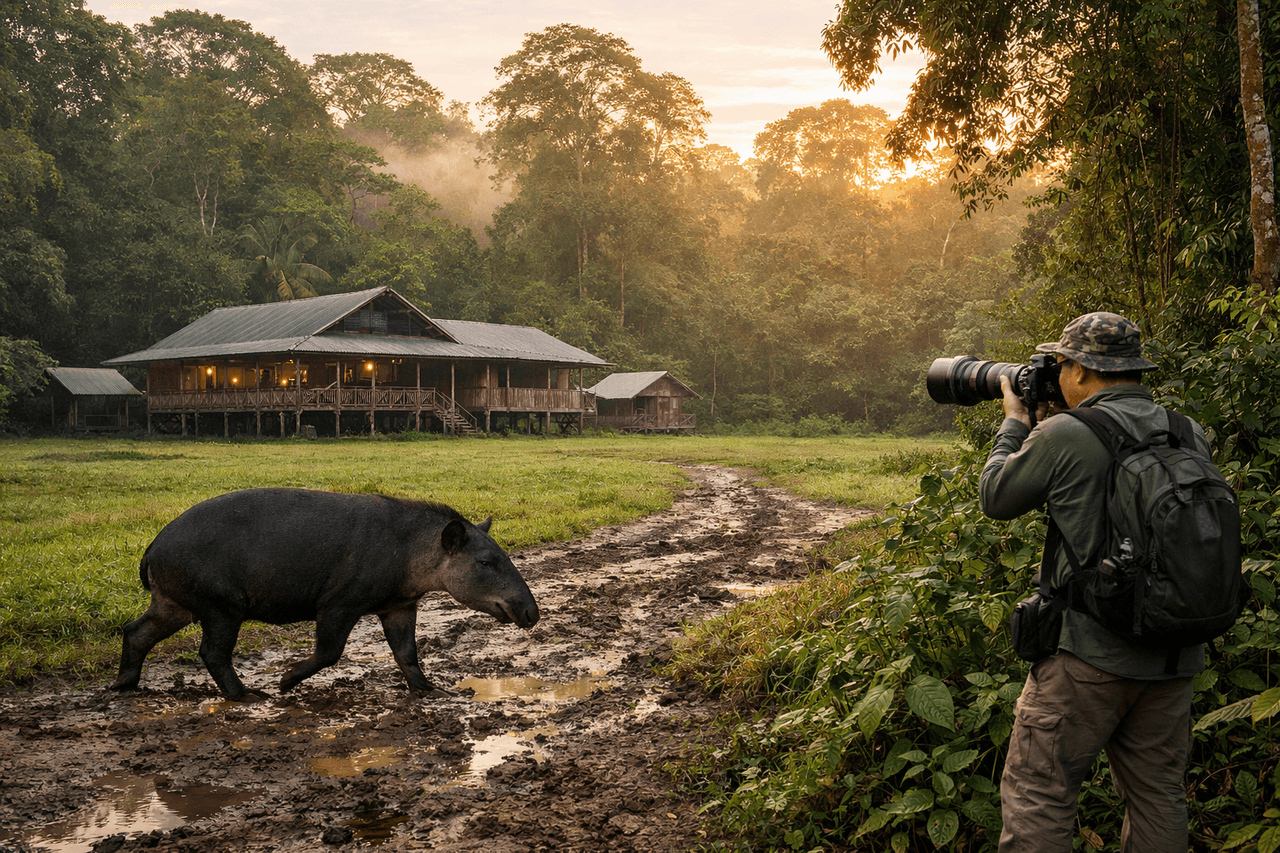
- Sirena Station provides the best access for photographing Baird's tapirs, jaguars, white-lipped peccaries, and scarlet macaw flyovers in primary rainforest
- Isla del Caño offers premier marine biodiversity experiences with coral reefs, sea turtles, dolphins, and seasonal humpback whale encounters[5]
- Costa Rica doubled daily permits for Corcovado in early 2026, but advance booking remains mandatory due to high demand[2]
- Golfo Dulce mangrove estuaries and coastal zones support habitat transitions critical for photographing species movement between ecosystems
- Optimal field conditions vary by season: dry season (December–April) for terrestrial access, wet season (May–November) for amphibian diversity and dramatic light
- The New York Times ranked the Osa Peninsula as a top 2026 travel destination specifically for its biodiversity significance[5]
Why Is Corcovado National Park the Premier Site for Biodiversity Photography?
Corcovado National Park represents the single most important destination for experiencing biodiversity on the Osa Peninsula. The park spans 181 square miles of primary tropical lowland rainforest and protects nearly half the peninsula's land area[1]. National Geographic's designation as "the most biologically intense place on Earth" isn't marketing—it reflects measurable species density that exceeds virtually any comparable area globally[1][2].
The numbers tell part of the story. Corcovado hosts at least half of Costa Rica's species within less than 0.001% of Earth's land surface[1]. But what matters in the field is encounter probability. I've worked this terrain for years, and the difference between Corcovado and other protected areas is immediate: you're not hoping to see wildlife, you're managing which subjects to prioritize when multiple opportunities present simultaneously.
Choose Corcovado if you want:
- Baird's tapir photography in natural habitat (highest encounter rates at Sirena Station)
- Jaguar tracking opportunities (still rare, but this is where it happens)
- White-lipped peccary herds moving through primary forest
- Scarlet macaw flyovers at predictable times (early morning, late afternoon)
- Four primate species in a single morning (squirrel, howler, spider, white-faced capuchin)
The park requires advance permits, and as of 2026, Costa Rica has doubled daily access limits to accommodate increased demand[2]. Book early. Sirena Station, accessible by boat or a challenging overland trek, provides the deepest penetration into primary forest and the highest probability of photographing rare species.
Common mistake: Visiting Corcovado without a certified guide. It's not optional—park regulations require guides, and for good reason. The terrain is unforgiving, navigation is complex, and understanding animal behavior dramatically improves your results.
What Makes Golfo Dulce Essential for Marine and Coastal Biodiversity?
Golfo Dulce functions as a protected marine embayment where warm Pacific currents create conditions for both tropical reef species and seasonal migratory megafauna. The gulf's unique bathymetry—it's one of only four tropical fjords globally—produces upwelling that concentrates nutrients and attracts humpback whales, dolphins, and large pelagic fish.
For photographers, Golfo Dulce offers three distinct zones:
Mangrove estuaries along the inner gulf support nursery habitat for juvenile fish, roosting sites for herons and egrets, and feeding grounds for caimans. The light here is challenging—dense canopy overhead, reflective water below—but the behavior is rich. Early morning produces the best conditions before wind disturbs the surface.
Coastal transition zones where rainforest meets tidal influence create edge habitat that concentrates species. I've photographed three-toed sloths in beach almond trees, green iguanas on exposed branches, and roseate spoonbills feeding in shallow pools—all within a hundred meters of primary forest. This habitat compression is rare and photographically productive.
Open water in the gulf proper hosts seasonal humpback whale populations (July–November and December–April, depending on which hemisphere's population is present) and year-round bottlenose dolphins. Boat-based photography here requires fast shutter speeds and patience. The whales are predictable in their unpredictability—you'll wait, then suddenly have thirty seconds of explosive surface activity.
Decision rule: If your primary interest is terrestrial wildlife, prioritize Corcovado. If you want to document habitat transitions and marine-terrestrial connections, Golfo Dulce's coastal zones are irreplaceable.
How Does Isla del Caño Compare for Marine Biodiversity Experiences?
Isla del Caño sits approximately 20 kilometers offshore from the Osa Peninsula and protects one of the region's most intact coral reef ecosystems. The island's biological reserve status limits access and protects both terrestrial (the island itself hosts archaeological sites and seabird colonies) and marine habitats[5].
The marine reserve surrounding Caño supports five species of sea turtles, manta rays, white-tip reef sharks, and seasonal whale shark encounters. Visibility typically ranges from 15 to 30 meters, depending on season and recent weather. The best underwater photography conditions occur during the dry season (December–April) when sediment loads decrease and water clarity improves.
What you'll photograph at Caño:
- Green and hawksbill sea turtles on reef structures
- Schools of jacks, snappers, and grunts in open water
- Coral formations (though Pacific reefs are less colorful than Caribbean counterparts)
- Manta rays at cleaning stations (seasonal, not guaranteed)
- Dolphins during boat transit to and from the island
Recent 2026 developments have expanded snorkeling access at Caño, making it more accessible for photographers who prefer freediving over scuba[5]. The shallower reef zones (3–8 meters) actually offer better light for photography than deeper sites, and you can make multiple dives without decompression concerns.
Edge case: If you're visiting during the wet season (May–November), expect reduced visibility but increased probability of encountering large pelagics. Whale sharks and manta rays are more commonly reported during this period, though conditions are less predictable.
Where Should You Focus for Rainforest Interior and Canopy Species?
The best places to experience biodiversity on the Osa Peninsula's rainforest interior require understanding vertical stratification. Tropical lowland rainforest isn't a single habitat—it's a series of distinct zones from forest floor to emergent canopy, each supporting different species assemblages.
Forest floor and understory (0–5 meters) support the highest density of invertebrates, amphibians, and ground-dwelling birds. Army ant swarms (Eciton burchellii) create mobile feeding opportunities for antbirds, woodcreepers, and occasionally motmots. I've spent entire mornings following a single ant column, photographing the succession of species that exploit the insects flushed by the swarm.
The light here is dim—typically 1–2% of ambient sunlight penetrates to the forest floor. You'll need high ISO capability (3200–6400) and fast lenses (f/2.8 or wider) to maintain reasonable shutter speeds. Tripods are impractical in the terrain; stabilization and technique matter more.
Mid-canopy (5–25 meters) hosts the majority of bird species, including toucans, trogons, tanagers, and woodpeckers. Photographing this zone requires either elevated platforms (rare on the Osa) or patience waiting for birds to descend to fruiting trees. Fig trees in fruit attract mixed-species flocks that can include twenty or more species simultaneously.
Emergent canopy (25–40 meters) is where you'll find scarlet macaws, harpy eagles (extremely rare, but present), and three-toed sloths. These subjects require long lenses (400mm minimum, 600mm preferred) and clear sight lines. River edges and coastal zones where forest meets open space provide the best access to emergent layer subjects.
Fun fact: The Osa Peninsula hosts all four Costa Rican monkey species in overlapping ranges—something possible in very few locations globally. Can you identify them by their vocalizations alone? Howlers are obvious, but distinguishing spider monkey barks from white-faced capuchin alarm calls takes field time.
What Role Does Matapalo Play in Coastal Rainforest Biodiversity?
Matapalo, the southeastern tip of the Osa Peninsula, represents a distinct biogeographic zone where coastal influence moderates rainforest conditions. The area's name comes from strangler figs (matapalos in Spanish), which are abundant here and create critical habitat structure.
The coastal forest at Matapalo differs from interior Corcovado in several ways that affect what you'll photograph:
Canopy height is lower (20–30 meters versus 40+ meters inland), making birds and arboreal mammals more accessible. I've photographed spider monkeys at eye level here—something nearly impossible in tall primary forest.
Edge habitat is extensive. The transition between forest and beach creates opportunities for species that exploit both zones: white-faced capuchins foraging in tide pools, green iguanas basking on beach logs, magnificent frigatebirds soaring the forest-ocean interface.
Tide pools and rocky intertidal zones support marine invertebrates, small fish, and shorebirds. The biological diversity here is different from open ocean or coral reef—it's a specialized assemblage adapted to extreme environmental variation. Photographically, tide pools work best at low tide with overcast light to minimize reflections.
Access is easier than Corcovado's interior. Several lodges and private reserves in Matapalo offer guided walks on maintained trails, making it suitable for photographers who want biodiversity experiences without the physical demands of backcountry trekking.
Choose Matapalo if: You want primate photography in accessible conditions, coastal-forest transition documentation, or tide pool macro work. Skip it if your priority is rare megafauna or deep primary forest species.
How Do Seasonal Rhythms Affect Biodiversity Photography on the Osa?
Understanding seasonal patterns is essential for planning productive field time on the Osa Peninsula. The region experiences two primary seasons—dry (December–April) and wet (May–November)—but the biological reality is more nuanced.
Dry season advantages:
- Trail access improves dramatically (many wet season trails become impassable)
- River crossings are safer and more predictable
- Terrestrial mammals concentrate near permanent water sources
- Scarlet macaw nesting activity peaks (January–April)
- Humpback whales from Northern Hemisphere arrive (December–April)
Dry season disadvantages:
- Reduced amphibian activity and visibility
- Dust on vegetation affects light quality
- Increased visitor numbers at popular sites
- Some bird species migrate out of the region
Wet season advantages:
- Amphibian diversity peaks (poison dart frogs, glass frogs, red-eyed tree frogs)
- Dramatic light conditions with storm systems moving through
- Fewer visitors, more solitude in the field
- Humpback whales from Southern Hemisphere arrive (July–November)
- Flowering and fruiting cycles attract concentrated bird activity
Wet season disadvantages:
- Trail conditions deteriorate rapidly
- River crossings can become dangerous or impossible
- Equipment management is challenging (humidity, rain protection)
- Some lodges and services reduce operations
I've worked both seasons extensively, and my preference depends on objectives. For terrestrial mammals and accessible conditions, dry season is superior. For amphibians, dramatic weather, and intimate rainforest atmosphere, wet season is irreplaceable—if you're prepared for the conditions.
Common mistake: Assuming dry season is always better. If you're targeting specific species (glass frogs, for example), wet season is the only viable option. Match your timing to your subjects, not to generic travel advice.
What Ethical Considerations Matter for Wildlife Photography Here?
The Osa Peninsula's biodiversity attracts photographers precisely because species density and encounter rates are exceptional. That concentration creates responsibility. The best places to experience biodiversity on the Osa Peninsula are also the most vulnerable to cumulative impact from human presence.
Maintain distance. Minimum approach distances aren't suggestions—they're based on species-specific stress responses. For jaguars and tapirs, 50 meters minimum. For nesting birds, 25 meters. For primates, 10 meters. Use long lenses, not proximity, to fill the frame.
Avoid playback. Using recorded calls to attract birds is prohibited in Corcovado and discouraged elsewhere. It disrupts territorial behavior, breeding activity, and predator avoidance. If you need playback to get the shot, you're not ready for the shot.
Respect trail restrictions. Closed trails are closed for biological reasons—nesting activity, denning sites, or habitat recovery. Going off-trail damages understory vegetation and creates erosion that persists for years.
Work with certified guides. This isn't just regulatory compliance—local guides understand current conditions, recent sightings, and behavioral patterns that dramatically improve your results while minimizing disturbance. The best guides are naturalists first, tour operators second.
Small-group field workshops produce better results than large tours. I've seen groups of fifteen people attempting wildlife photography—it's ineffective and disruptive. Four to six participants maximum allows for positioning, reduces noise, and distributes impact.
The Osa's biodiversity isn't a resource to extract—it's a system to document with care. Your images should reflect not just technical skill but ecological understanding and respect for the subjects that make this work possible.
FAQ
How many days do I need to experience the Osa Peninsula's biodiversity effectively?
Minimum five days for meaningful coverage: two days in Corcovado (including Sirena Station), one day at Isla del Caño, one day in Matapalo coastal forest, and one day for Golfo Dulce mangroves or buffer zone reserves. Seven to ten days allows for weather contingencies and repeat visits to productive sites.
What camera gear is essential for Osa Peninsula wildlife photography?
A telephoto lens (400–600mm) for canopy and distant subjects, a mid-range zoom (70–200mm f/2.8) for forest interior and primates, and a macro lens (90–105mm) for amphibians and invertebrates. Bodies with strong high-ISO performance (usable 6400+) and weather sealing are critical. Bring more batteries and memory cards than you think you need.
Can I visit Corcovado National Park independently without a guide?
No. Park regulations require certified guides for all visitors. This isn't negotiable and is enforced at entry points. Guides must be registered with the park service and carry liability insurance.
When is the best time to photograph scarlet macaws on the Osa Peninsula?
January through April during nesting season, when pairs are most active and predictable. Early morning (6:00–8:00 AM) and late afternoon (4:00–6:00 PM) produce the best light and highest flight activity. Beach almond trees in fruit attract large numbers.
What's the difference between Sirena Station and San Pedrillo Station in Corcovado?
Sirena offers deeper primary forest access, higher mammal encounter rates (especially tapirs), and more extensive trail systems. San Pedrillo, on the park's northwest coast, provides easier access, coastal forest habitat, and good primate photography but lower probability of rare megafauna.
How physically demanding is wildlife photography on the Osa Peninsula?
Highly variable by location. Matapalo coastal trails are moderate. Corcovado interior trails are strenuous—expect heat, humidity, river crossings, and uneven terrain. Fitness level directly affects your ability to reach productive sites and work effectively once there.
Are there photography workshops specifically for the Osa Peninsula?
Yes. Small-group field workshops led by photographers with extensive Osa experience provide the best combination of access, instruction, and local knowledge. Look for workshops that emphasize field craft and animal behavior, not just camera settings.
What health precautions are necessary for field work on the Osa?
Yellow fever vaccination is recommended. Antimalarial prophylaxis is not typically necessary but consult your physician. Insect repellent with DEET, sun protection, and water purification are essential. The nearest medical facilities are in Puerto Jiménez—serious emergencies require evacuation to San José.
How has increased tourism affected wildlife behavior on the Osa Peninsula?
Corcovado's doubled permit system (implemented 2026) has increased visitor numbers, but wildlife remains relatively habituated in high-traffic areas like Sirena Station[2]. More remote trails show less human tolerance. Early morning and late afternoon still offer the best conditions with fewer people present.
What's the current permit situation for Corcovado National Park in 2026?
Daily permits have doubled but still require advance booking through authorized operators or the park service directly[2]. High season (December–April) books weeks in advance. Wet season offers more availability but access depends on trail conditions.
Can I photograph jaguars on the Osa Peninsula?
Possible but not probable. Corcovado hosts a viable jaguar population, but encounters remain rare even for researchers. Your best chance is Sirena Station area during dry season, working with guides who monitor recent tracks and scat. Most photographers spend years in the field before documenting a jaguar here.
What makes the Osa Peninsula different from other Costa Rican biodiversity sites?
Species density and intact habitat. The Osa contains more than 2% of Earth's total biodiversity in approximately 700 square miles[1][5]. Unlike fragmented reserves elsewhere, Corcovado protects continuous primary forest from coast to highlands, supporting viable populations of species extinct or rare in other regions.
Conclusion
The best places to experience biodiversity on the Osa Peninsula—Corcovado National Park, Golfo Dulce, Isla del Caño, and Matapalo—represent distinct ecosystems that together encompass the region's extraordinary biological richness. National Geographic's designation of this area as "the most biologically intense place on Earth" reflects measurable reality: 250,000 species, 323 endemics, and encounter rates that exceed virtually any comparable tropical region[1][2].
Your results here depend on preparation, timing, and understanding that biodiversity photography is field craft first, camera technique second. Match your locations to your subjects: Sirena Station for terrestrial megafauna, Golfo Dulce for habitat transitions, Caño for marine ecosystems, Matapalo for accessible coastal forest. Work with certified guides who understand animal behavior and current conditions. Respect the systems you're documenting—your images should reflect ecological knowledge, not just opportunistic encounters.
The Osa Peninsula's recognition as a top 2026 travel destination has increased access and awareness[5]. That attention brings both opportunity and responsibility. The same biodiversity that makes this region exceptional also makes it vulnerable to cumulative impact. Small-group field workshops, ethical practices, and commitment to understanding rather than simply photographing will determine whether this biological intensity persists for the next generation of photographers.
Book your permits early, prepare for challenging field conditions, and bring more time than you think you need. The Osa rewards patience, skill, and respect with images and experiences unavailable anywhere else on Earth.
References
[1] Biodiverse Wonders Of Osa Peninsula - https://www.gondwanaecotours.com/travel-journal/biodiverse-wonders-of-osa-peninsula/
[2] What To Do In Costa Rica Nature Guide - https://hauteretreats.com/what-to-do-in-costa-rica-nature-guide/
[3] Osa Peninsula Highlighted As One Of The Must Visit Destinations Of 2026 - https://peopleofcostarica.com/osa-peninsula-highlighted-as-one-of-the-must-visit-destinations-of-2026/
[4] Osa Peninsula Worlds Top Travel Destination 2026 - https://botanikaresort.com/osa-peninsula-worlds-top-travel-destination-2026/
[5] New York Times Spotlights Costa Ricas Osa As Top 2026 Travel Pick - https://ticotimes.net/2026/01/08/new-york-times-spotlights-costa-ricas-osa-as-top-2026-travel-pick
[6] Osa Peninsula Travel Destination Award - https://www.bodhisurfyoga.com/osa-peninsula-travel-destination-award
[7] Attractions G309279 Activities C61 Osa Peninsula Province Of Puntarenas - https://www.tripadvisor.com/Attractions-g309279-Activities-c61-Osa_Peninsula_Province_of_Puntarenas.html